

Agscent raises AUD $5 million to boost AI scent tech
Tue, 28th Jul 2026
Agscent has raised AUD $5 million in a funding round that values the Australian company at AUD $26.9 million.
The Canberra-based business is developing sensing technology that uses artificial intelligence, biological signal analysis and sensors to identify chemical signatures in breath and air. Its early work has focused on livestock, including pregnancy detection, disease identification and methane measurement.
The round included family offices, agricultural investors and producers, among them Nick Burton-Taylor, Viv Oldfield and Chris Hoppe. Existing backers Scale Investors and Tundra Capital also participated.
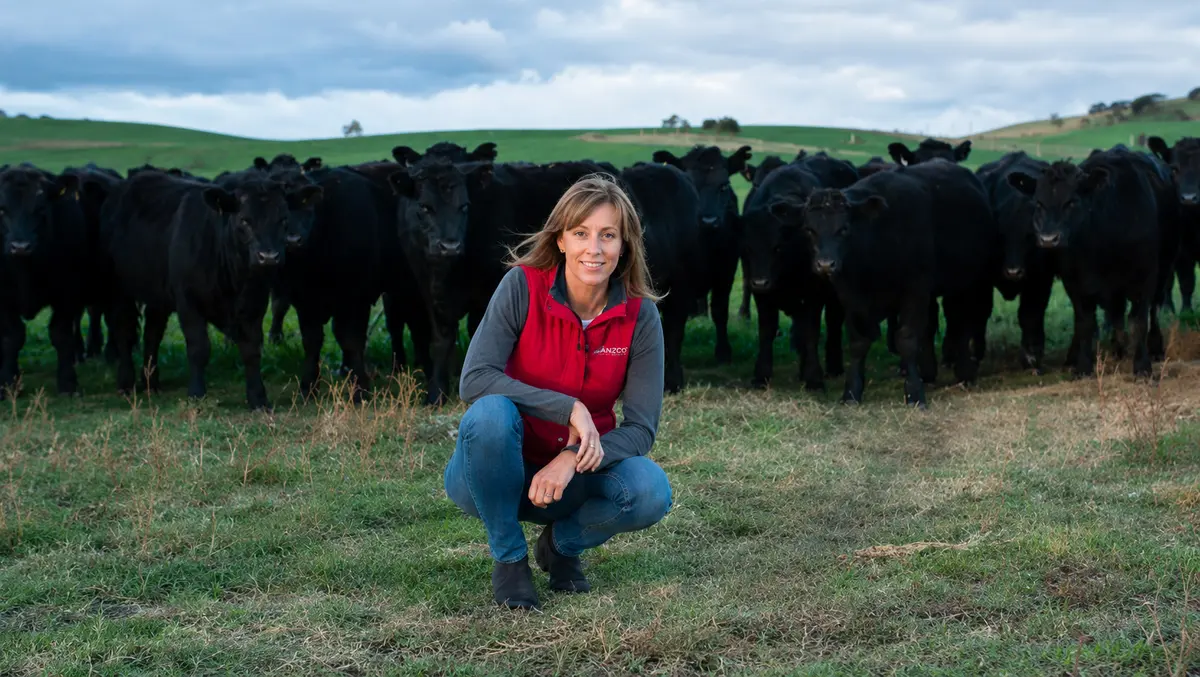
The new capital follows an 18-month period in which Agscent's valuation more than doubled. The company was founded by behavioural economist and farmer Dr Bronwyn Darlington.
Darlington said the business is trying to teach machines to interpret scent the way animals do.
"Scent has guided life since evolution began. Long before we had words, we had smell. It warned us of danger, told us what was safe to eat, and signalled who was healthy and who wasn't. Animals still rely on it every day. We're using AI to decode those signals to build, in effect, a digital dog's nose. Our machines can interpret scent the way a dog does, and we are using AI to interpret all kinds of biological signals that can improve life for humans, and especially for the animals we depend on," said Dr Bronwyn Darlington, Founder and Managing Director of Agscent.
Livestock focus
Agscent's first commercial applications are in cattle. Its system can identify pregnancy from a cow's breath as early as 18 days after insemination, compared with around 40 days for more traditional testing.
That earlier readout could give producers more time to make breeding and herd management decisions. The process does not require invasive testing or veterinary intervention.
Methane measurement is another part of the business. Agscent said that work has generated more than AUD $2.8 million in revenue in Australia and overseas, and presents methane as a productivity measure as well as an emissions issue.
Tundra Capital investor Mark Gustowski said the appeal for farmers was the speed of results in the field.
"For farmers, the value is simple. Answers that used to take weeks and a lab now happen on the spot, in the yards, in seconds. That kind of in-situ diagnostic capability takes real pressure off farms on timing and cost, and it is what convinced us to back Agscent. There is also broader potential in industrial and environmental monitoring, which is a welcome bonus on top of the core agricultural use case," said Gustowski.
Agscent is deploying its methane work through its own measurement platform and through a collaboration with livestock technology company Optiweigh. It is also running validation programmes in the United States with Dairy Farmers of America and Merck Animal Health.
Those programmes involve thousands of animals and are aimed at validating its pregnancy detection and disease identification technology. Dairy Farmers of America represents about one-third of US dairy production.
NASA origins
Part of Agscent's technology base comes from work first developed by NASA to monitor astronaut health and detect hazardous airborne compounds during long-duration space missions. Darlington said she found the relevant sensing technology in NASA's online patent library while working from her farm in regional New South Wales during the Covid pandemic.
That led Agscent to license elements of the technology and combine them with a sensing platform already under development. The business says the result brings together artificial intelligence, biological sensing and chemical analysis.
"We realised we weren't simply developing another agricultural tool. We were creating an entirely new way for machines to understand the world," said Darlington.
Investor Chris Hoppe said the immediate agricultural use case was clear, but argued the longer-term commercial scope could be much wider.
"A company that can provide a more efficient pregnancy diagnosis for cattle is great. But the potential beyond that is enormous. Think what we can do with our mobile phones now compared with when the technology was first developed. I believe that huge leap forward will come from this technology, which can interpret the biological signals that surround us in the air," said Hoppe.
While agriculture remains the company's first market, Agscent sees wider uses in environmental monitoring, biosecurity, food production and non-invasive health diagnostics. The underlying premise is that breath and air carry chemical information that machines can learn to detect and interpret.
Darlington framed that opportunity in broad terms as the company expands beyond cattle.
"We started with cows because that's where we could test and prove the technology, but what we're really building is a biological sensing platform. The opportunity is far bigger than agriculture. Every breath tells a story. We're giving machines the ability to understand it," said Darlington.